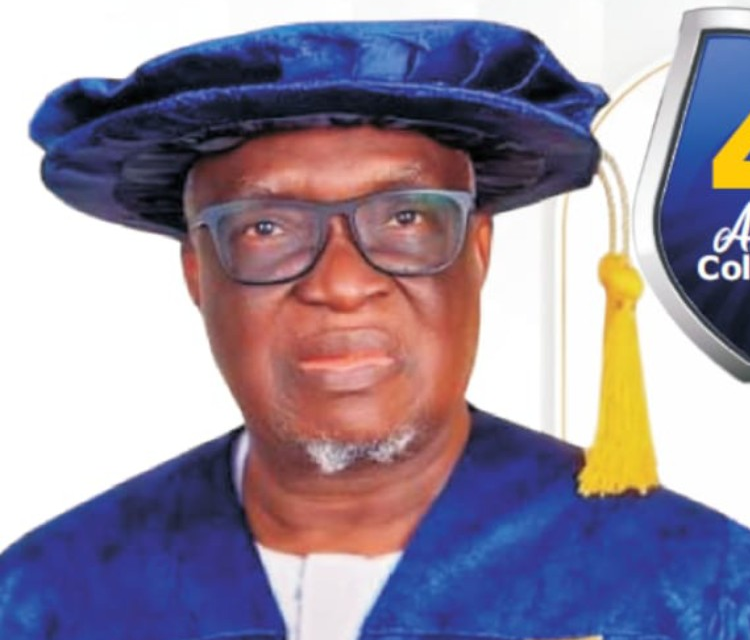
The Federal University Lokoja (FUL), Kogi State, on Wednesday, November 11, celebrated the intellectual contributions and literary accomplishments of Emeritus Professor Olu Obafemi at its fourth Annual Colloquium in his honour, held as part of activities marking the university’s 2026 convocation ceremony.
A statement issued by the ANA media team said the academic gathering, which attracted prominent scholars, literary practitioners, university administrators, traditional rulers and members of the Association of Nigerian Authors (ANA), provided a platform for examining the enduring relevance of Obafemi’s creative and intellectual contributions to Nigerian literature and society.
Held at the university’s Multi-Purpose Hall, Felele Campus, Lokoja, the colloquium was themed “Creativity as Criticism in Olu Obafemi’s Works”. It explored the relationship between literary imagination and social consciousness, particularly the capacity of creative writing to interrogate political structures, expose social injustices, challenge prevailing ideologies and inspire positive transformation. The Vice-Chancellor of Baze University, Abuja, Professor Abiodun Adeniyi, chaired the occasion.
In his welcome address, the Vice-Chancellor of Federal University Lokoja, Professor Gbenga Solomon Ibileye, described the colloquium as an important intellectual tradition established to celebrate Professor Obafemi through meaningful academic engagement with his ideas and creative works.
He recalled that the initiative began in 2023 under the administration of the university’s former Vice-Chancellor, Professor Olayemi Akinwumi, and had since evolved into an annual gathering of scholars, students, colleagues and admirers of the distinguished literary figure.
Ibileye expressed his commitment to sustaining and strengthening the initiative, describing the honouree as his adopted father, mentor and an enduring model of intellectual and ethical commitment. He acknowledged that Obafemi’s guidance and encouragement had significantly influenced his personal and professional journey.
The Vice-Chancellor further explained that the 2026 theme invited participants to look beyond the conventional understanding of creativity as artistic production and consider its capacity to question established assumptions, interpret social experiences and create possibilities for change.
He appreciated the invited paper presenters, the Department of English and Literary Studies, the Head of Department, Dr Peter Okpeh, and the Local Organising Committee, led by Dr Abba Abba, for their contributions to the successful organisation of the programme. He urged participants to engage actively in the discussions and uphold the intellectual values that the colloquium represents.
In his remarks, the Chairman of the occasion, Professor Abiodun Adeniyi, Vice-Chancellor of Baze University, Abuja, paid glowing tribute to Emeritus Professor Olu Obafemi, describing him as an exceptional scholar, creative writer, dramatist and intellectual whose contributions had enriched Nigerian literature and scholarship.
He noted that Obafemi’s literary engagements demonstrated that creativity was not merely an exercise in artistic expression but also a powerful instrument for interrogating society, confronting injustice and promoting human advancement.
Adeniyi commended Federal University Lokoja for sustaining an intellectual platform that recognises distinguished scholars through serious academic engagement rather than ceremonial celebrations alone. He urged younger scholars and writers to draw inspiration from Obafemi’s commitment to scholarship, artistic excellence and the use of literature as an instrument of social transformation.
Earlier, the Chairman of the Local Organising Committee, Dr Abba Abba, described the gathering as both a celebration of an accomplished literary career and an opportunity to interrogate a body of work that challenges society to reflect more deeply on art, power and human responsibility.
He observed that the colloquium had, since its inception, sustained an important intellectual conversation across generations of scholars and students.
Abba acknowledged the contributions of the university’s former Vice-Chancellor, Professor Olayemi Akinwumi, and the incumbent, Professor Ibileye, for their respective roles in initiating and sustaining the academic initiative.
He particularly commended Professor Obafemi for his investment in younger generations, noting that the enduring worth of a scholar lies not only in publications and professional distinctions but also in the lives influenced, minds nurtured and opportunities created.
The intellectual sessions featured presentations by four distinguished academics.
Professor Sola Timothy Babatunde of the Department of English, University of Ilorin, presented a paper titled “The Rhetorics of Mass Protest: Exploring the Discourse Strategies in Olu Obafemi’s Plays”. His presentation examined Obafemi’s use of language, rhetorical devices and dramatic techniques to communicate his social and political concerns.
He argued that Obafemi’s works reflected a strong commitment to confronting oppression, marginalisation and socioeconomic inequalities while encouraging audiences to embrace informed and constructive social action.
Foluke Aliyu of the Department of English and Literary Studies, University of Ilorin, examined the relationship between the legendary figure Ajon and Obafemi’s creative ideology in a presentation titled “Ajon: The Legend Who Made a Kingdom”.
Drawing on New Historicism, she argued that Ajon could be understood as a symbolic figure whose representation draws attention to society’s responsibility to address injustice and oppression.
Another major contribution came from Professor Sola Adeyemi of the School of Literature, Drama and Creative Writing, University of East Anglia, Norwich, United Kingdom, who presented a paper titled “Creative Imagination as Critical Intervention: The Dramatic and Intellectual Praxis of Olu Obafemi”.
He examined how Obafemi’s plays, poetry and critical essays combine artistic imagination with ideological engagement to interrogate issues of power, class, gender, nationalism and cultural memory.
Drawing on selected works, including Suicide Syndrome (1993), Naira Has No Gender (1995), Dark Times Are Over? (2001), Pestle on the Mortar (2005) and Running Dreams (2008), Adeyemi demonstrated how the playwright employs narrative structures, satire, mythology and dramatic experimentation as instruments of social criticism.
Professor Ofure Odede Maria Aito of the Department of English and Literary Studies, Federal University Lokoja, presented a paper titled “‘Look Back in Anger’: Diagnoses and Prognoses in Olu Obafemi’s Creativity as Criticism”.
Her presentation explored how Obafemi’s creative works expose political, economic and cultural contradictions while imagining alternative possibilities for social transformation. She highlighted his engagement with class struggles, ethnic conflicts, gender relations, political corruption and the marginalisation of vulnerable communities.
The programme also featured a dramatic presentation titled “Playlet Interlude”, comprising a short scene from Dr Abba Abba’s play, When the Earth Bleeds. The performance added an artistic dimension to the day’s intellectual discussions.
A major highlight of the event was the presentation of a large portrait of Emeritus Professor Olu Obafemi by the management of Confluence University of Science and Technology (CUSTECH), Osara, in recognition of his distinguished contributions to literature, scholarship and the development of the humanities. The gesture further underscored the esteem in which the literary icon is held within the academic community.
The colloquium attracted several principal officers of Federal University Lokoja, including the Registrar, Dr Rebecca Okojie; Deputy Vice-Chancellor (Academic), Professor S. D. Musa; Deputy Vice-Chancellor (Administration), Professor Jacqueline Badaki; University Librarian, Dr Florence Ajani; and the Bursar, Mallam Sanusi Abubakar Halidu. Traditional rulers and other distinguished guests were also in attendance.
Representing the Association of Nigerian Authors (ANA) were Mallam Denja Abdullahi, former President of the association, and Wole Adedoyin, its General Secretary, who represented the ANA President, Dr Usman Oladipo Akanbi.
Other notable attendees included Dr Bode Ojoniyi, immediate past Acting Director of the Wole Soyinka Centre, University of Abuja, who represented Professor Sunnie Ododo; Professor Mnguember Vicky Sylvester, Professor of Literature and Creative Writing at the University of Abuja; and members of the ANA Kogi State Chapter, led by its Chairman, Mr Y. J. Itopa.
The successful organisation of the event was made possible by the efforts of the Local Organising Committee, comprising Dr Abba Abba, Chairman; Dr Peter Ochefu Okpeh, Head of Department; Dr Grace Olanrewaju, Secretary; Mr Dan Nwankwo, Media and Publicity; Dr Amos Awobi, Transportation and Accommodation; Professor Ifeyinwa Okolo, Logistics; Dr Barnabas Oluwatoyin, Drama; and Aderonke M. Osayanda, Book Exhibition.
The fourth edition further reinforced Federal University Lokoja’s commitment to preserving intellectual legacies and promoting critical scholarship. It also reaffirmed Emeritus Professor Olu Obafemi’s enduring relevance as a creative writer, dramatist, scholar, teacher and mentor whose works continue to inspire conversations about literature, justice, national development and the human condition.