Poor standard has been identified as a major barrier to the full acceptance and breakthrough of herbal medicines in the local and international markets.
Prof. Kunle Olubayo, the Chief of Staff to the Director-General (D-G) Standards Organisation of Nigeria (SON), made this known to the News Agency of Nigeria (NAN) on Wednesday.
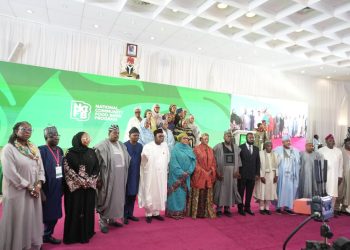
He spoke on the sidelines of the 9th African Day of Standardisation 2022 Symposium, organised by SON in collaboration with the African Organisations for Standardisation (ARSO) in Lagos.
He said that the major reason Nigerian herbal/traditional medicines seemed to have gone nowhere was because they did not meet standard.
He said that herbal medicines were very important to healthcare delivery, contributing significantly to universal health coverage in Nigeria.
According to him, some herbal medicines get to the market without adequate research and clinical trials to confirm their safety and efficacy.
Olubayo, who lamented that some herbal medicine often carried fake SON or NAFDAC registration number, stressed the need for standardisation of the herbal products to secure people’s confidence in them.
“Despite the widespread use, traditional/herbal medicines have not yet been fully accepted both in the local and international market due to its inability to meet standard.
“And that has been a major barrier to the excel, growth and development of herbal medicines,” he said.
Olubayo said there was need for synergy between herbal medicine practitioners and SON as well as NAFDAC, to pave the way for quality assurance and standardisation of herbal medicines.
He, however, explained that SON was already working with a 10-member Committee to see how to bring the natural products to standard, which some of the herbal practitioners were members.
Olubayo noted that the quality control, proper identification of medicinal plants, standardisation of active ingredients and chemical compounds in herbal medicine needed to be addressed.
According to him, if the herbal products can be produced to meet the required standard, it will create massive patronage not only in the local market, but also in the international market.
He advised that herbal medicine practitioners should take their business seriously and liaise with appropriate standard certifying authorities to see how their products could be made to meet standard.
“We must appreciate the fact that the herbal medicines we have are quite efficacious and there is the need for us to tap into the indigenous knowledge.
“It is with standard that you cross borders; for example in Africa, if we agree on a particular standard and I followed them in my little village industry in corner of Nigeria.
“It means that the person sitting somewhere in Kigali or CapeTown will accept that product because it has been produced according to what he understands and what he agrees is efficacious and safe,” he said.
He said that standards were really the platform on which herbal medicine manufacturers could leverage and deliver their services and products, not just within the continent, but to the world.
“And we do know that when it comes to active pharmaceutical ingredients, we will probably be playing catch-up with the rest of the world – they are already far ahead.
“But when it comes to like herbals, we can lead, and if we do make our herbal medicines to meet standards, then, the world will use them,” he said.
Olubayo also expressed readiness of the organisation (SON) to collaborate and work together with herbal medicine practitioners.
He, therefore, urged practitioners to always work and collaborate with SON, to certify and ensure that the herbal medicines met the required standards.
“But, one thing is that SON is not going to go into the laboratory to force standard on anybody; by definition, standards are demanded by stakeholders.
“Personally, I think those who are into herbal medicine production should begin to think more of it as a business; and when you are in a business, then you’re serious and need to operate according to standard.
“So, we have demonstrated that we can, we are available and we want to; therefore, herbal practitioners should approach SON,” Olubayo said. (NAN)