• Home
  • Nation
  • Politics
  • Business & Economy
    • Education
  • Health
  • Culture & Entertainment
    • Arts & Life
  • World
    • World Business
  • Perspectives
  • Sport
New Citizen
  • Home
  • Nation
  • Politics
  • Business & Economy
    • Education
  • Health
  • Culture & Entertainment
    • Arts & Life
  • World
    • World Business
  • Perspectives
  • Sport
No Result
View All Result
  • Home
  • Nation
  • Politics
  • Business & Economy
    • Education
  • Health
  • Culture & Entertainment
    • Arts & Life
  • World
    • World Business
  • Perspectives
  • Sport
No Result
View All Result
New Citizen
No Result
View All Result
Home Nation Education

Only teacher education can dismantle systemic gender barrier in STEM – Nnaka

NEW CITIZEN by NEW CITIZEN
July 24, 2025
in Education
A A
0
0
SHARES
8
VIEWS
Share on FacebookShare on TwitterShare on WhatsappShare on Telegram


A professor of Science and Technology Education, National Open University of Nigeria (NOUN), Chibuogwu Virginia Nnaka, has revealed the central role of professional teacher education towards dismantling systemic gender barriers in Science, Technology, Engineering, and Mathematics (STEM) education and careers.

Nnaka, a renown advocate for gender equity in science and technology education, disclosed this while delivering the 34th Inaugural Lecture of the university, titled, “Professional Teacher Education: A Catalyst for Widening the Gateway to Gender Equity in STEM Education and Careers.”

The lecture, which took place on Thursday, July 24, 2025 at the NOUN headquarters in Abuja, dwelt on achieving equity in STEM which, according to the lecturer, must be the product of deliberate, strategic, and policy driven efforts, not mere happenstance.

She argued that teacher education serves as a foundational pillar for shaping perceptions, building capacity, and transforming classrooms into gender inclusive learning environments.

According to her, teachers are the first contact learners have with STEM, and thus must be professionally trained to challenge cultural biases, dismantle stereotypes, and mentor girls through their academic journeys in these fields.

“Teachers can either be gatekeepers of inequality or champions of inclusion,” she said, adding, “The difference lies in how they are trained.”

Nnaka broke down the STEM concept as more than an academic effort, presenting it as a critical driver of innovation, industrialisation, and national development.

She expressed concern over the persistent underrepresentation of women and girls in STEM, which she described as a major developmental shortfall for Nigeria.

The university don drew attention to global and national statistics, noting that less than 30% of researchers globally are women as in Nigeria only 17% of students enrolled in tertiary STEM programmes are female.

Persistent cultural norms, gender stereotypes, inadequate mentorship, and male biased curricular content, she further said, have remained formidable barriers.

“When women are missing in STEM, half the population’s potential is lost. Innovation becomes stunted, and national development suffers,” she added.

Drawing from her over four decades of academic research, administrative experience, and field-based interventions, Professor Nnaka presented empirical evidence supporting her assertions.

The lecture highlighted studies demonstrating how Open and Distance Learning (ODL) increases access for marginalised and female learners in remote areas; gender sensitive curriculum interventions that foster inclusive pedagogy and challenge traditional biases as well as mentorship models that significantly improve STEM retention and performance among girls when supported by trained female educators.

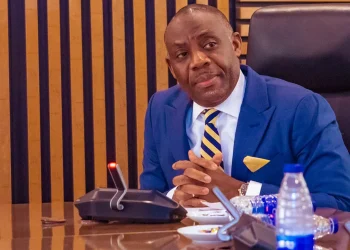
Earlier in his opening remarks, the Vice-Chancellor of NOUN, Professor Olufemi Peters, praised the presenter’s contributions to education and her unwavering commitment to inclusion, policy advocacy, and excellence in teaching.

“This inaugural lecture is not just another academic engagement,” he said, “It is a reflection of where we are as a society and where we must go if we are to break the chains of inequality and empower the next generation,” the VC, who was represented by the Deputy Vice-Chancellor (Technology, Innovation and Research), Professor Godwin Akper, said.

On his part, the Deputy Vice-Chancellor (Academic), Professor Chiedu Mafiana, delivered the vote of thanks, applauding Nnaka’s lifelong commitment to education and social change.

Represented by Professor Isaac Butswat, the Deputy Vice Chancellor (Academics), Mafiana remarked: “This lecture is more than an academic ritual; it is a national call to transform our classrooms, policies, and systems in favour of equity, innovation, and national progress.”

Previous Post

Edun hails rebated GDP figures and strong A1 2025 growth as foundation for sustained takeoff

Next Post

APC elects Yilwatda as new Chairman as Tinubu urges governors to deepen grassroots engagement

Related Posts

“Most Courses in Nigeria’s Universities Have Expired”: A Rejoinder to Adesola Adefemi Ojuolape
NUC logo
Education

“Most Courses in Nigeria’s Universities Have Expired”: A Rejoinder to Adesola Adefemi Ojuolape

October 19, 2026
FG releases 2026/2027 admission list for Federal Unity Colleges
Dr Tunji Alausa, Minister of Education
Education

Recruitment waiver process for federal tertiary institutions remains in force – FG

October 19, 2026
Alausa hails Dangote Foundation’s plan to give shares to 4m students
Minister of Education, Dr Maruf Tunji Alausa
Education

Alausa hails Dangote Foundation’s plan to give shares to 4m students

October 19, 2026
FG begins payment of allowances under new tertiary education agreements
The Minister of Education, Dr Maruf Tunji Alausa, and other dignitaries display the 2026 agreements during the unveiling ceremony in Abuja on Tuesday
Education

FG begins payment of allowances under new tertiary education agreements

October 13, 2026
Radda increases Katsina students’ bursary allowances by 100% after 18 years
Governor Dikko Umaru Radda delivers his speech during the flag-off of the students' bursary disbursement at the state Institute of Technology and Management, Katsina, on Monday 
Education

Radda increases Katsina students’ bursary allowances by 100% after 18 years

October 12, 2026
FG begins distribution of 2 million sanitary towel packs, learning materials to keep girls in school
The First Lady, Senator Oluremi Tinubu, and other dignitaries at the launch of the distribution of two million packs of sanitary towels and learning materials to girls in public basic education schools across the 36 states and the Federal Capital Territory (FCT), held the State House Banquet Hall, Presidential Villa, Abuja, to mark the 2026 International Day of the Girl Child, on Monday 
Education

FG begins distribution of 2 million sanitary towel packs, learning materials to keep girls in school

October 12, 2026
Next Post

APC elects Yilwatda as new Chairman as Tinubu urges governors to deepen grassroots engagement

Leave a Reply Cancel reply

Your email address will not be published. Required fields are marked *

Recent Posts

  • Court sacks David Mark-led ADC leadership, voids Atiku’s presidential primary
  • Tinubu departs Saudi Arabia for Abuja after completing Umrah
  • Photos: 8th Tozali Henna Ball and People’s Awards
  • Tinubu reaffirms commitment to Nigeria after praying inside Ka’abah
  • Tozali calls for support for survivors at 8th Henna Ball, People’s Awards

Recent Comments

No comments to show.

Recent Posts

  • Court sacks David Mark-led ADC leadership, voids Atiku’s presidential primary
  • Tinubu departs Saudi Arabia for Abuja after completing Umrah
  • Photos: 8th Tozali Henna Ball and People’s Awards
  • Tinubu reaffirms commitment to Nigeria after praying inside Ka’abah
No Result
View All Result
  • Home
  • Nation
  • Politics
  • Business & Economy
    • Education
  • Health
  • Culture & Entertainment
    • Arts & Life
  • World
    • World Business
  • Perspectives
  • Sport

© 2024 New Citizen

error: Content is protected !!