Scammers: Nigeria has become a vast scam zone, demanding urgent action. Just when it seemed we had reached the peak of scams and scandals with the revelation of certificate racketeering from neighboring Cotonou in Benin Republic, allegations of outright stealing and money laundering surfaced from the Ministry of Humanitarian Affairs and Poverty Eradication.
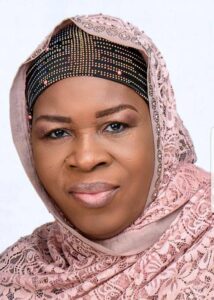
However, whether by coincidence or design, the female gender bore the brunt of a scandal involving the triumvirate of former minister Sadiya Farouq, suspended minister Betta Edu, and suspended National Social Investment Programme Agency (NSIPA) boss, Halima Shehu, all linked to an N84.1 billion fraud in the same ministry. Ironically, a ministry established to provide social services, cater to the poor, and alleviate poverty is now entangled in scandals. These women succeeded in taking from the poor to feed their fantasies and enrich themselves.
Considering the ministry’s history, we should have been more circumspect. The ministry, created only about five years ago, seemed like a special purpose vehicle (SPV) for a powerful individual, former minister Sadiya Farouq. Connected and protected from the highest hierarchy, all the shady dealings were swept under the carpet.
Additionally, all social intervention programmes and agencies under the VP’s office were amalgamated into the new humanitarian ministry, resulting in more funds flowing into it during the Buhari administration. President Tinubu retained the ministry under Dr Betta Edu. However, the recent revelations necessitate scrapping the ministry and some of its agencies. There is nothing humane about the ministry; it has lost its welfare focus in the maze of corruption and has outlived its relevance.
In the first instance, the idea of giving cash in an era of inclusive banking is a wrong-headed approach to poverty alleviation, indicative of backwardness and lack of critical thinking. It is also open to abuse, and the method of selecting households for inclusion in social programmes is flawed. The government must find more ingenious ways to support the poor without compromising the system.
We must not forget the symbolism lost in the unfortunate involvement of these high-profile ladies in the fraudulent operation of the ministry. They represent two major marginalized groups in society—the youth, whose inclusion in governance we have been clamoring for, and the womenfolk, who have been advocating for 35 percent affirmative action. This is heart-breaking and speaks volumes about the political class, regardless of gender and age.
…And the mad rush over Cotonou certificate racketeering
Even without official statistics, Nigeria harbors the highest number of people with legitimate certificates from other countries worldwide, especially in the last 20 to 30 years when the government began neglecting its responsibilities. It failed to address anomalies in our educational system, such as infrastructure deficit, manpower crisis, and frequent ASUU-Government face-offs that sometimes kept students at home for over a year. In no time, foreign universities, once the exclusive preserve of the rich, spread to the middle class. Without proper monitoring and regulations, scammers joined the bandwagon, acquiring degree certificates from foreign lands through the backdoor.
However, since journalist Umar Audu burst their bubble in a chronicle of events that got him a degree from a university in Cotonou, Benin Republic, a few weeks ago, government agencies have been scrambling to rectify their past negligence and lukewarm oversight. Audu’s expose revealed how he arranged and obtained a certificate in six weeks, using it to subscribe to the mandatory National Youth Service Corps (NYSC).
Before the expose, it was an open secret that individuals with fake certificates worked in our institutions at both national and subnational levels. In hushed voices, people wondered how our system could be so lax as to absorb such graduates into plum jobs reserved for influential members of society. In September 2021, I heard of a lady who resumed studies in a university in Cotonou, claiming to have graduated around March 2022. Although she claimed to have obtained a diploma from a Nigerian university before the Cotonou voyage, her quick graduation in less than six months surprised her friends. Let’s be truthful; no one can say they’ve never heard of six-month degrees or outright fake ones from Ghana, Niger Republic, Kenya, Uganda, and Benin Republic. The authorities looked the other way, and people who engaged in it went unpunished, while others had the audacity to follow suit.
The Federal Ministry of Education, National Universities Commission (NUC), and NYSC are complicit in the fake certificate saga and the proliferation of universities. The NUC has accredited countless universities without proper scrutiny. Complaints and recommendations for the expansion and equipping of older universities for the accommodation of more students fell on deaf ears. Once the institutional framework to regulate is undermined, it becomes a free-for-all, with certificate racketeers working hand in gloves with government agency officials to perpetrate their frauds.
This is evident because, even in the Audu report causing shivers across the country, it was established that the previous government under Adamu Adamu as the minister of education set up a committee to investigate fake universities and degrees from foreign universities, but it seems the report never saw the light of day or was implemented. The established cartels of these MDAs are so powerful that it has been a roller-coaster of certificate mills for students and corrupt officials.
Nigeria was not like this before. Our universities were a toast of the world, and we did have foreign students in our universities. Our only hope and plan while in secondary school was to attend one of the first or second-generation universities in the country. Private universities did not even exist, and private secondary schools were a rarity. Admission was not difficult if you had the required credits, but even then, many were forced to study courses they did not want due to carrying capacity or exclusion by geography. This applied more to courses like medicine, engineering, or law.
That was the era of drizzles before the rain. By the time Nigeria happened to us, corruption had taken firm root, ASUU had begun its endless strikes, potential students had to write JAMB multiple times, and the number of intending students increased exponentially, making waiting for admission in a Nigerian university like waiting for Godot. Then came foreign universities and phony degrees.
As condemnable as seeking refuge in illegal universities is, it thrived because our system is dysfunctional, and offenders are never punished. The most annoying part of the Audu investigation is the NYSC. A simple biometrics validation could expose scammers and fakers. Why didn’t the NYSC do that in Audu’s case? The answer lies in the greed of the officials and their self-serving approach to public service. It is rather shameful that all this took place under officials who obviously allowed criminality to supplant patriotism and the need to do the right thing. It is even more embarrassing that these same government agencies, with the same set of people (except the ministers), are now trying to outdo one another over the fake certificate report, to exonerate themselves or prove their innocence, after they had condoned it.
We need to reinvent ourselves, invest more to revive our educational system, de-emphasize paper qualifications, reduce and punish corruption, and not allow impunity to hold sway. There are standard ways to do things, global best practices to emulate, and enough legal tools to weed out bad eggs.
The easiest method is biometrics, including fingerprints and facial revalidation, similar to the bimodal system developed by INEC (before things went awry) for revalidation and authentication. Was this too much for NYSC? If evaluating certificates is too arduous for the Ministry of Education or withholding accreditation too tasking for NUC, what then is their job description? Honestly, we need to wake up and do the right thing before Nigeria becomes truly a criminal enterprise.