• Home
  • Nation
  • Politics
  • Business & Economy
    • Education
  • Health
  • Culture & Entertainment
    • Arts & Life
  • World
    • World Business
  • Perspectives
  • Sport
New Citizen
  • Home
  • Nation
  • Politics
  • Business & Economy
    • Education
  • Health
  • Culture & Entertainment
    • Arts & Life
  • World
    • World Business
  • Perspectives
  • Sport
No Result
View All Result
  • Home
  • Nation
  • Politics
  • Business & Economy
    • Education
  • Health
  • Culture & Entertainment
    • Arts & Life
  • World
    • World Business
  • Perspectives
  • Sport
No Result
View All Result
New Citizen
No Result
View All Result
Home World

South Africa’s Archbishop Desmond Tutu dies at 90

A Correspondent by A Correspondent
December 26, 2021
in World
A A
0
Archbishop Desmond Tutu celebrated his 86th birthday and the unveiling of an arch in his honour outside St George’s Cathedral in Cape Town. Reuters/Mike Hutchings

Archbishop Desmond Tutu celebrated his 86th birthday and the unveiling of an arch in his honour outside St George’s Cathedral in Cape Town. Reuters/Mike Hutchings

0
SHARES
4
VIEWS
Share on FacebookShare on TwitterShare on WhatsappShare on Telegram

Archbishop Desmond Tutu, the Nobel Peace prize laureate who helped end  apartheid in South Africa, has died aged 90.

BBC quoted President Cyril Ramaphosa as saying the churchman’s death marked “another chapter of bereavement in our nation’s farewell to a generation of outstanding South Africans”.

Archbishop Tutu had helped bequeath “a liberated South Africa,” he added.

Tutu was one of the country’s best known figures at home and abroad.

A contemporary of anti-apartheid icon Nelson Mandela, he was was one of the driving forces behind the movement to end the policy of racial segregation and discrimination enforced by the white minority government against the black majority in South Africa from 1948 until 1991.

He was awarded the Nobel prize in 1984 for his role in the struggle to abolish the apartheid system.

Tutu’s death comes just weeks after that of South Africa’s last apartheid-era president, FW de Clerk, who died at the age of 85.

Archbishop Tutu was a contemporary of anti-apartheid icon Nelson MandelaPresident Ramaphosa said Tutu was “an iconic spiritual leader, anti-apartheid activist and global human rights campaigner”.

He described him as “a patriot without equal; a leader of principle and pragmatism who gave meaning to the biblical insight that faith without works is dead.

“A man of extraordinary intellect, integrity and invincibility against the forces of apartheid, he was also tender and vulnerable in his compassion for those who had suffered oppression, injustice and violence under apartheid, and oppressed and downtrodden people around the world.”

The Nelson Mandela Foundation was among those paying tributes, saying Tutu’s “contributions to struggles against injustice, locally and globally, are matched only by the depth of his thinking about the making of liberatory futures for human societies.

“He was an extraordinary human being. A thinker. A leader. A shepherd.”

It is impossible to imagine South Africa’s long and tortuous journey to freedom – and beyond – without Archbishop Desmond Tutu. While other struggle leaders were killed, or forced into exile, or prison, the diminutive, defiant Anglican priest was there at every stage, exposing the hypocrisy of the apartheid state, comforting its victims, holding the liberation movement to account, and daring Western governments to do more to isolate a white-minority government that he compared, unequivocally, to the Nazis.

When democracy arrived, Tutu used his moral authority to oversee the Truth and Reconciliation Commission that sought to expose the crimes of the white-minority government. Later he turned that same fierce gaze on the failings, in government, of South Africa’s former liberation movement, the ANC.

Many South Africans today will remember Tutu’s personal courage, and the clarity of his moral fury. But as those who knew him best have so often reminded us, Tutu was always, emphatically, the voice of hope. And it is that hope, that optimism, accompanied, so often, by his trademark giggles and cackles, that seems likely to shape the way the world remembers, and celebrates, Archbishop Desmond Tutu.

Known affectionately as The Arch, Tutu was instantly recognisable, with his purple clerical robes, cheery demeanour and almost constant smile.

He was not afraid to show his emotions in public, including memorably laughing and dancing at the opening ceremony of the football World Cup in South Africa in 2010.

Despite his popularity though he was not a man who was loved by all. He was very critical of the government in the post-apartheid era, when, at times, he felt it was misrepresenting South Africa.

Ordained as a priest in 1960, he went on to serve as bishop of Lesotho from 1976-78, assistant bishop of Johannesburg and rector of a parish in Soweto. He became Bishop of Johannesburg in 1985, and was appointed the first black Archbishop of Cape Town the following year. 

He used his high-profile role to speak out against oppression of black people in his home country, always saying his motives were religious and not political.

After Mandela became South Africa’s first black president in 1994, Tutu was appointed by him to a Truth and Reconciliation Commission set up to investigate crimes committed by both whites and blacks during the apartheid era.

He was also credited with coining the term Rainbow Nation to describe the ethnic mix of post-apartheid South Africa, but in his latter years he expressed regret that the nation had not coalesced in the way in which he had dreamt.

– BBC
Previous Post

COVID-19: No death from Omicron variant yet in Nigeria, says NCDC

Next Post

Drinking to victory

Related Posts

Idris seeks stronger African alliance against misinformation
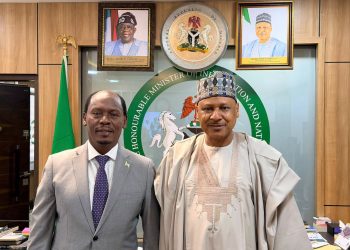
R-L: The Minister of Information and National Orientation, Mohammed Idris, with Kenya’s Cabinet Secretary for Information, Communications and the Digital Economy, William Kabogo Gitau, during the visit in Idris's office in Abuja today 
World

Idris seeks stronger African alliance against misinformation

November 17, 2026
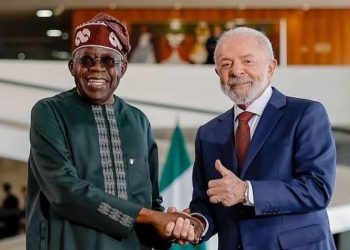
Tinubu congratulates Brazil’s Lula on re-election, seeks stronger bilateral ties
President Bola Tinubu with Brazilian President Luiz Inácio Lula da Silva
World

Tinubu congratulates Brazil’s Lula on re-election, seeks stronger bilateral ties

October 26, 2026
Nigeria leads ECOWAS delegation in talks with Sahel Alliance in Dakar
Nigeria's Minister of State for Foreign Affairs, Ambassador Sola Enikanolaiye, leads the country’s delegation to the first round of discussions between the Economic Community of West African States (ECOWAS) and the Alliance of Sahel States (AES) in Dakar, Senegal, today 
World

Nigeria leads ECOWAS delegation in talks with Sahel Alliance in Dakar

October 16, 2026
World

Nigeria wins UN Human Rights Council seat with 172 votes

October 14, 2026
Nigeria hosts over 142,000 refugees, 6.7m IDPs – Minister
L-R: The Minister of Humanitarian Affairs and Poverty Reduction, Dr. Bernard M.Doro, alongside Amb. Innocent A. Iwejuo, Nigeria's Permanent Representative in Geneva, ahead of delivering Nigeria's National Statement at the 77th Session of UNHCR's Executive Committee (ExCom)
World

Nigeria hosts over 142,000 refugees, 6.7m IDPs – Minister

October 13, 2026
Nigeria, seven West African countries move to strengthen border cooperation
Director-General of the National Boundary Commission (NBC), Surveyor Adamu Audu Adaji, representing Nigeria at the Third Meeting of Heads of National Boundary Commissions, which held in Banjul, The Gambia, from October 6 to 8, 2026
World

Nigeria, seven West African countries move to strengthen border cooperation

October 10, 2026
Next Post
Drinking to victory

Drinking to victory

Leave a Reply Cancel reply

Your email address will not be published. Required fields are marked *

Recent Posts

  • CBN, NNPCL sign MoU to boost economic stability, energy financing
  • Tinubu expands 2027 campaign schedule from 12 states to 19 and Abuja
  • REPRONIG seeks partnership with National Library on copyright awareness
  • COAS calls for intensified combat training as Army expands
  • Idris seeks stronger African alliance against misinformation

Recent Comments

No comments to show.

Recent Posts

  • CBN, NNPCL sign MoU to boost economic stability, energy financing
  • Tinubu expands 2027 campaign schedule from 12 states to 19 and Abuja
  • REPRONIG seeks partnership with National Library on copyright awareness
  • COAS calls for intensified combat training as Army expands
No Result
View All Result
  • Home
  • Nation
  • Politics
  • Business & Economy
    • Education
  • Health
  • Culture & Entertainment
    • Arts & Life
  • World
    • World Business
  • Perspectives
  • Sport

© 2024 New Citizen

error: Content is protected !!